Abstract
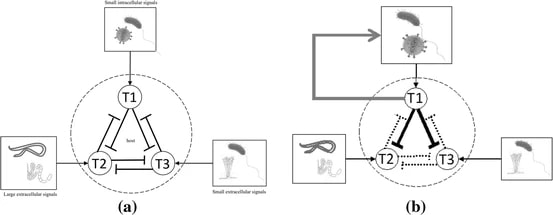
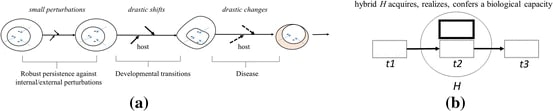
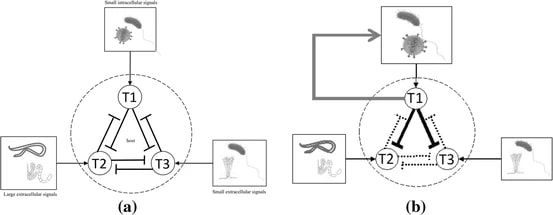
There is currently a great debate about whether the holobiont, i.e. a multicellular host and its residential microorganisms, constitutes a biological individual. We propose that resident microorganisms have a general and important role in the individuality of the host organism, not the holobiont. Drawing upon the Equilibrium Model of Immunity (Eberl in Nat Rev Immunol 16:524–532, 2016), we argue that microorganisms are scaffolds of immune capacities and processes that determine the constituency and persistence of the host organism. A scaffolding perspective accommodates the contingency and heterogeneity of resident microorganisms while accounting for their necessity and unifying contributions to host individuality. In our symbiotic view of life, holobionts may not be organisms or units of selection, but macroorganisms cannot persist nor function as individuals without their scaffolding microorganisms.